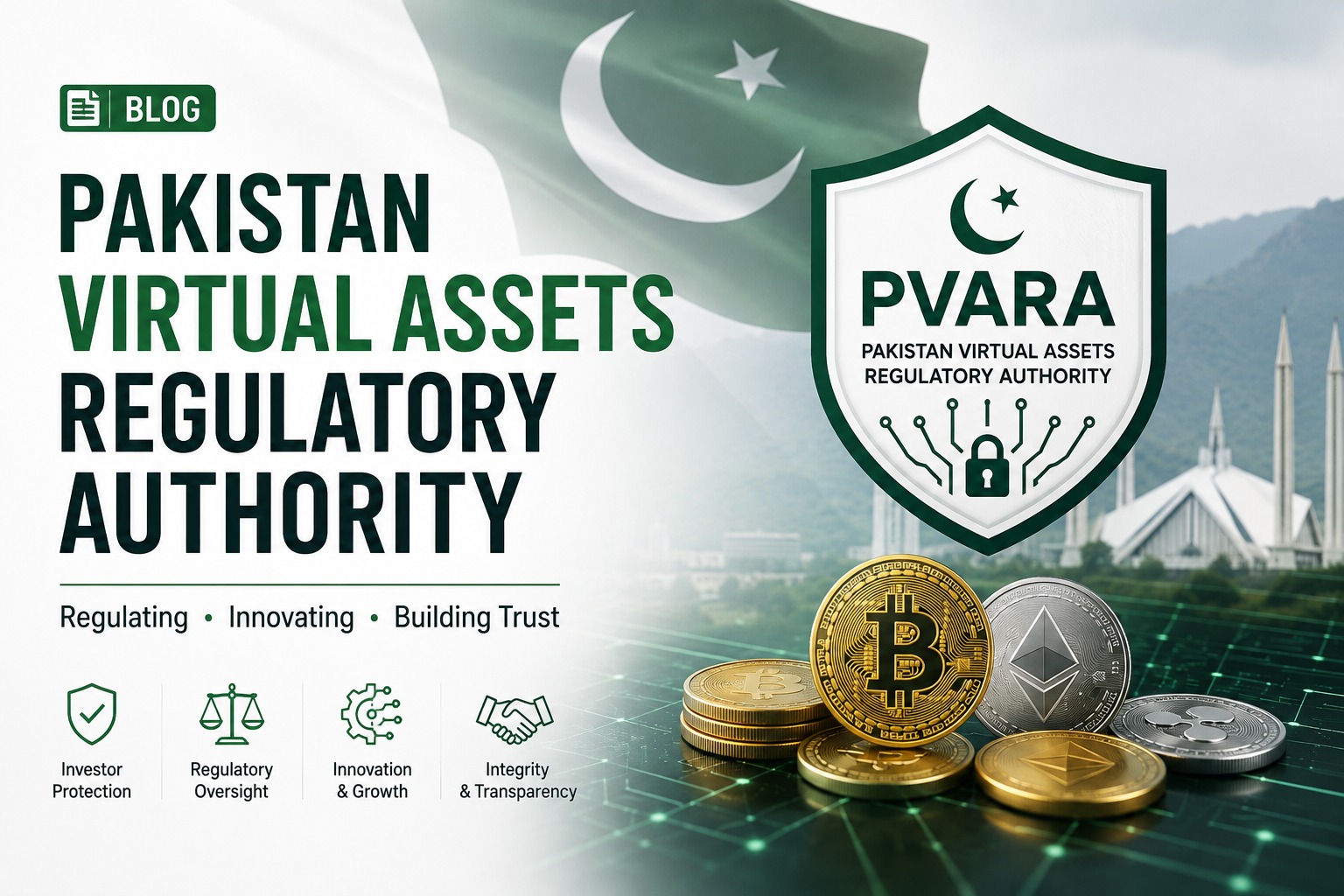
Pakistan Virtual Assets Regulatory Authority (PVARA)
The Pakistan Virtual Assets Regulatory Authority (PVARA) is Pakistan’s federal regulator responsible for licensing, supervising, and regulating virtual assets and Virtual Asset Service Providers (VASPs). It operates under the Virtual Assets Act, 2026, which provides Pakistan with a dedicated legal and regulatory framework for the virtual-asset sector.
What is PVARA?
PVARA was established to create a regulated, transparent and compliant environment for virtual-asset activities in Pakistan. Its responsibilities include licensing and supervision of VASPs, consumer and investor protection, market integrity, and measures designed to prevent money laundering, terrorist financing and other illicit uses of virtual assets.
Who May Come Under PVARA Regulation?
The regulatory framework applies to businesses providing virtual-asset services, including activities such as virtual-asset exchanges, custody, brokerage, transfer and other regulated virtual-asset services. PVARA’s framework also addresses token-related and other blockchain-based activities falling within its regulatory mandate.
Licensing and Regulatory Compliance
Businesses intending to provide regulated virtual-asset services in Pakistan must comply with the applicable PVARA requirements. PVARA currently provides an NOC process as an initial regulatory step, followed by requirements including AML registration, local incorporation and the subsequent licensing process.
Applicants are expected to demonstrate appropriate corporate governance, financial capability, beneficial ownership information, AML/CFT controls, and technology and security arrangements.
AML/CFT Requirements
A major element of Pakistan’s virtual-asset framework is compliance with Anti-Money Laundering and Counter-Terror Financing (AML/CFT) requirements. Regulated providers are expected to conduct customer due diligence, monitor transactions, maintain appropriate records and report suspicious activity in accordance with applicable law and regulatory requirements.
Protecting Consumers and Supporting Innovation
PVARA’s mandate is not limited to enforcement. The regulatory framework also aims to support responsible innovation, digital financial inclusion and the development of compliant virtual-asset markets, while maintaining financial stability, market integrity and consumer protection.
PVARA has also indicated that parties considering virtual-asset pilots, stablecoin applications, tokenization structures or related blockchain solutions should engage with the Authority through appropriate regulatory channels, including the Regulatory Sandbox, No-Action Relief Letters or NOC process, where applicable.
Legal Advice for Businesses Entering the Virtual-Asset Sector
The emergence of PVARA represents an important development for businesses operating or planning to operate in Pakistan’s digital-asset sector. Companies should carefully assess whether their proposed activities fall within the regulatory framework, determine the applicable authorization or licensing requirements, and establish appropriate corporate, AML/CFT, compliance and data-security structures before commencing regulated activities.
Chamber of Saba Saeed Sheikh provides legal consultancy and regulatory advice to businesses navigating complex and evolving areas of Pakistani law, including corporate, banking, taxation, technology and regulatory matters. The firm’s profile states that it advises on corporate and transactional matters and has experience in regulatory compliance and technology-sector matters.
Conclusion
PVARA marks a significant step toward the formal regulation of virtual assets in Pakistan. As the regulatory framework continues to develop, businesses involved in cryptocurrency, digital assets, blockchain-based services and related financial technology should remain attentive to licensing, compliance and regulatory requirements.
This article is for general informational purposes and should not be treated as legal advice. Specific regulatory obligations depend on the nature and structure of the proposed activity.